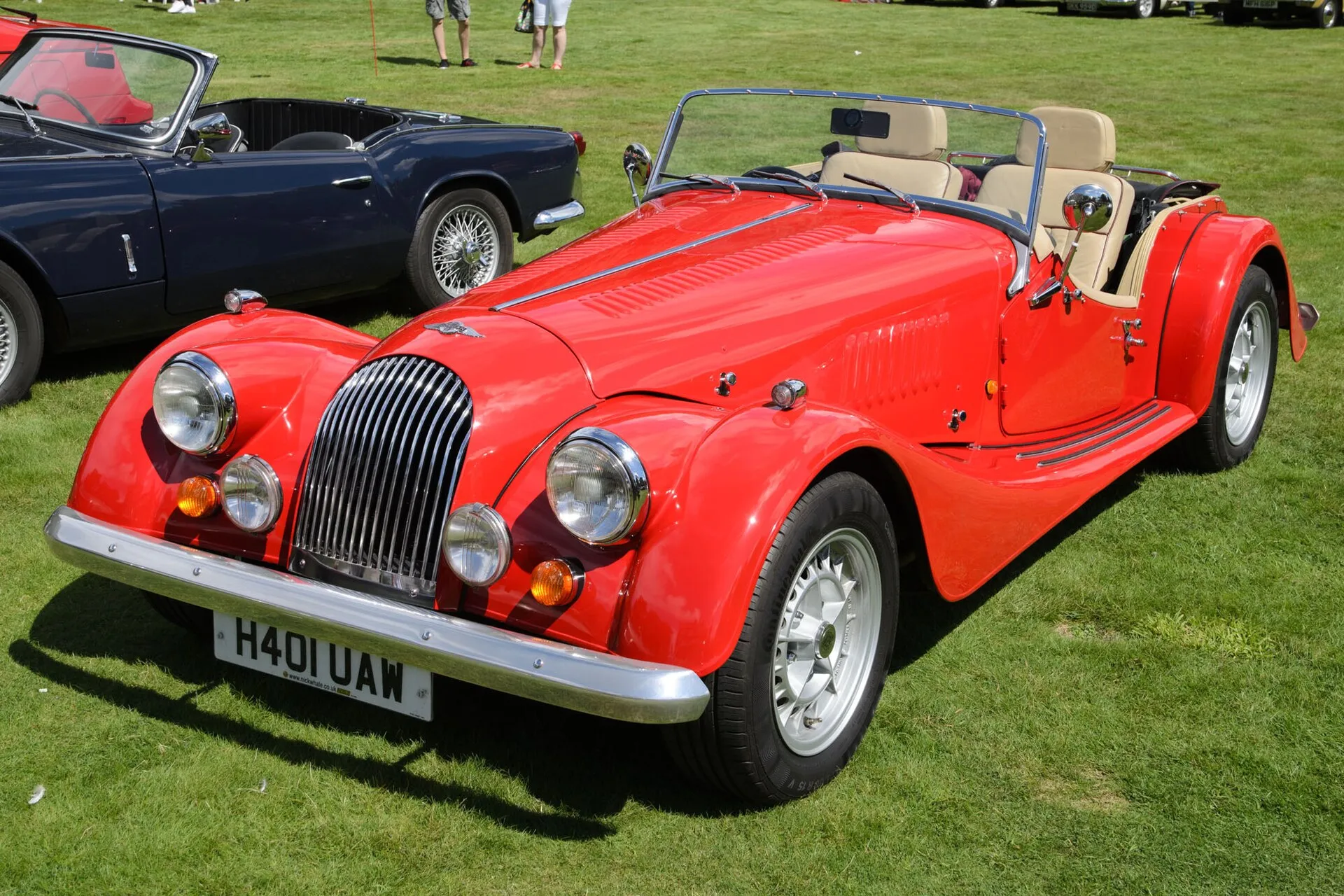
The Plus 8 had barely gone on sale when America, which had been taking most of Morgan’s cars, changed its rules. For the next thirty years Morgan went on building a 1930’s design for a market that kept trying to regulate it out of existence, and owners happily waited their turn to buy one. I was one of them!
The Registry shows what happened. Of its cars built from 1950 to 1968, 72% are in the United States. Of those built from 1969 to 1999, 22% are.
1969–1973America closes
The United States brought in emissions controls in 1969, and Morgan’s American market all but died. Simanaitis Says The Plus 8 had gained American type approval in 1970, but by 1971 the regulations had ended Morgan’s large American trade. Unsigned company history, Wikipedia
Mine came in just as the door was swinging shut. It was shipped in May 1971, sent to New Orleans instead of Mobile (two extra weeks!), and finally arrived in Mobile on a freighter loaded with pipe—I could see my Morgan coming in delicately balanced on top of a vast pyramid of drain pipes! The windscreen, top and both seats were packed in the back, so my first drive was made sitting on a cardboard box, trying to get it out of first gear, where it had frozen on the trip over… The whole tale is in my Saga.
1968–1992Propane, from San Francisco
Bill Fink had founded Isis Imports in San Francisco in 1968, on Eddy Street. He named it after the River Isis at Oxford, for his love of rowing. Simanaitis Says
His way back in was fuel—of all things! After long discussions with the federal authorities and a great deal of paperwork, he won approval in 1974 to convert new Plus 8s to run on propane, which made them legal to import. Each car also needed different bumpers, reinforced doors, padded sun visors, inertia seat belts and a taller windscreen. Simanaitis Says The conversions went on until 1992, and 98% of the Morgans imported that way were Plus 8s. Wikipedia According to the Registry timeline, Morgan then sold fully compliant cars in America, without conversion, from 1992 to 1996.
The Registry holds 123 Plus 8s built between 1974 and 1992 that are in the United States today. See them.
Isis later moved to Pier 33, by Fisherman’s Wharf, and opened a second site in Bodega. Simanaitis Says I visited in 1996, and tucked way back in the back of one of the piers was one of the neatest gatherings of cars I had seen in a long time! On the East Coast, the Fergus business had been the great Morgan importer of the 1950’s and 1960’s; Joe Ferguson, who ran it, died in Alabama in 1995. Ferguson Club
1968–1999The V8 years
The Plus 8 carried the company. It went through four gearboxes: the Moss four-speed it was born with, Rover’s four-speed from 1972, Rover’s five-speed LT77, and from the mid-1990’s the R380, with a remote linkage made for Morgan. Wikipedia, Braunstein chart, v94 The engine gained fuel injection in 1984, grew to 3.9 litres in 1990, and to 4.6 litres in 1996 or 1997. Unsigned company history, Braunstein chart, v94, Hagerty, Plus 8 guide
One thing it never got from the factory was a radio. When I ordered mine I asked Mr Day, Peter Morgan’s vice-president, to please fit an AM/FM radio. By return mail he replied that they would be happy to supply the car as ordered, with the exception of the radio: Mr Morgan felt that a true sports car driver should be listening to the music of the engine, not of a radio! I have never once considered putting one in since.
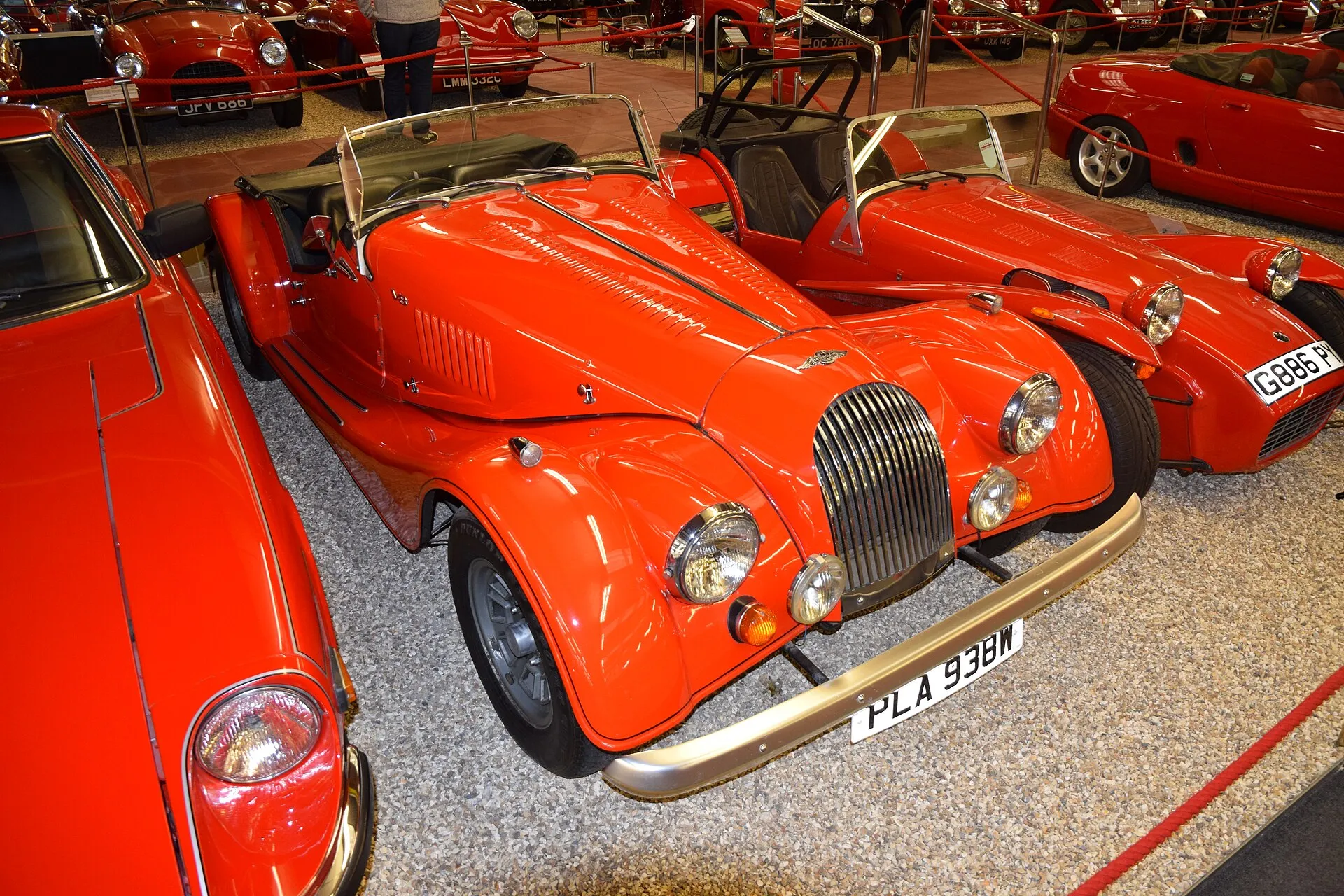
In 1975 Motor Sport’s Bill Boddy found 100 to 105 operatives building eight to ten cars a week, three or four of them Plus 8s, aiming at 400 to 450 cars a year, and 65% were exported. A Plus 8 cost £2,925 and a two-seater “Plus-4” £2,094. Motor Sport, June 1975 (He must have meant the 4/4: the same article says the Plus 8 and the 4/4 were the only cars Malvern was making, and the Plus 4 did not come back until 1985.) I had been there myself three years before, in 1972, and it was akin to going to Nirvana! I was given free rein to wander about all day, everyone was happy, kind and interested in my questions, and Peter Morgan was as nice and polite as everyone said. The shop looked just as it had for forty years, with dark open timbers and old posters on the walls. It was one of the best days I have ever had!
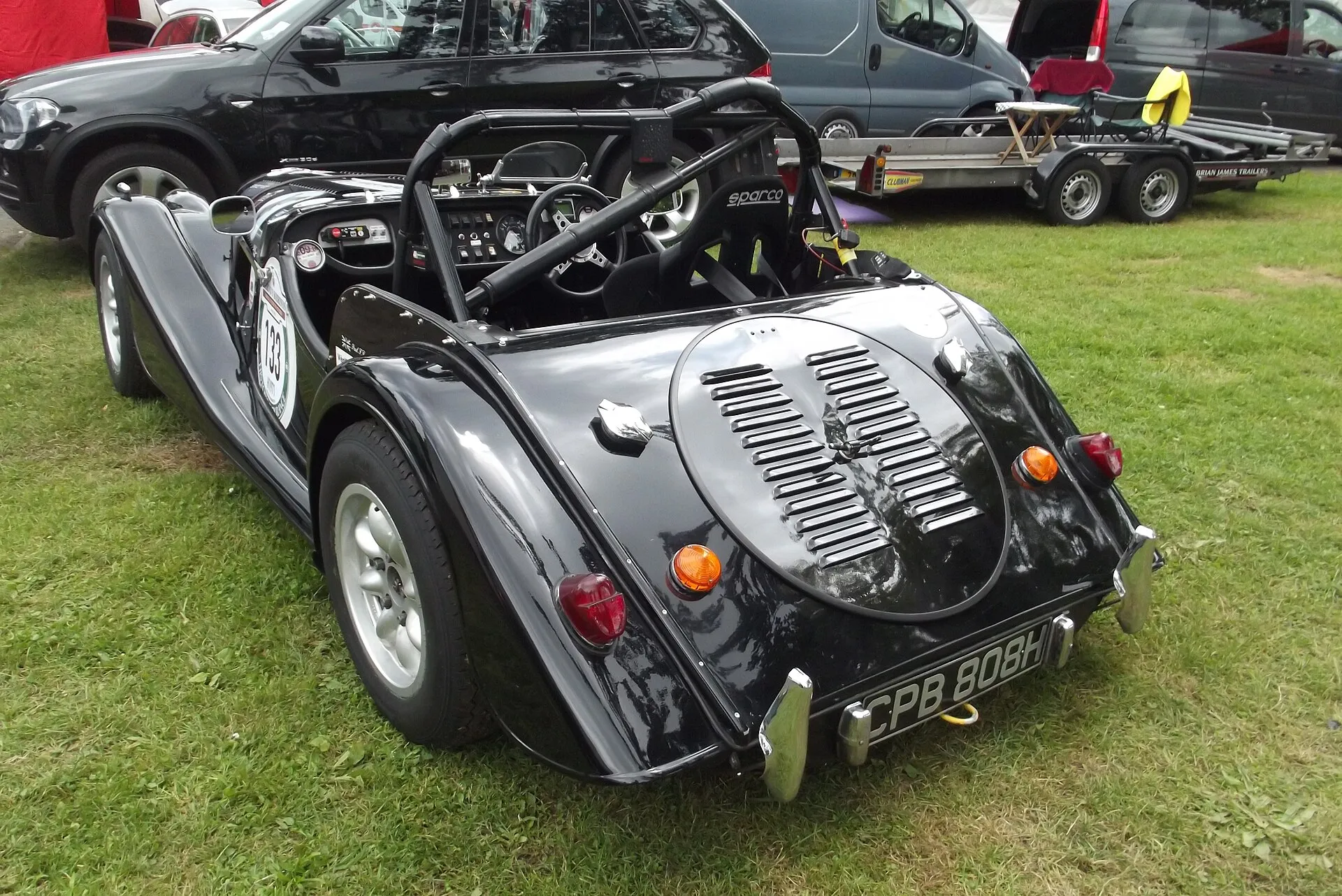
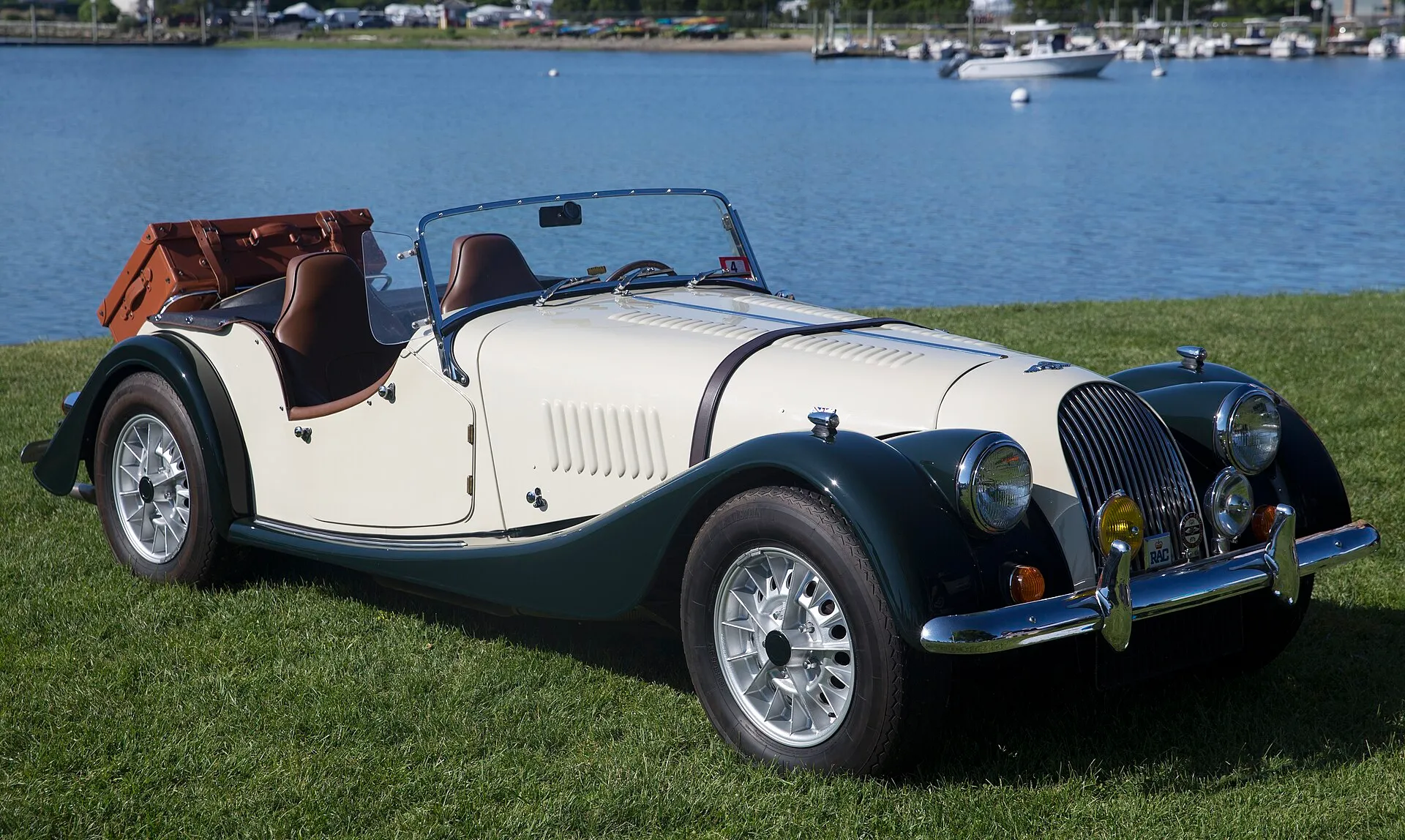
The Plus 4 came back in 1985 with a Fiat engine, and with a Rover engine from 1987 or 1988. Classic & Sports Car, Morgan, History (2022) The Registry holds 1,108 Plus 8s built in these thirty years. See them.
Sources differ
The gearbox dates differ by a year or so. Wikipedia: Rover four-speed 1972–1977, LT77 1977–1995, R380 from 1995. Braunstein’s chart: LT77 1976–1994, R380 from 1994. Wikipedia, Braunstein chart, v94
The LT77 five-speed: 1977 in Wikipedia and in Hagerty’s buyer’s guide, which dates the Rover SD1 five-speed to that year; 1976 in Braunstein’s chart and on an owners’ technical page that says it was “introduced to Morgans in 1976”. Morgan’s own page gives the four-speed as “1968–77”, which fits 1977 as the year the five-speed took over. Both dates are probably right in different senses, a first car and a general fit. Nothing I found settles the R380’s year beyond the 1994 and 1995 above. Wikipedia, Braunstein chart, v94, Hagerty, Plus 8 guide, gomog.com, gearboxes, Morgan, Plus 8 page
The Rover engine in the Plus 4: 1988 in Classic & Sports Car’s history; “two years” after the Fiat-engined return of 1985, so 1987, in Morgan’s own history. Classic & Sports Car, Morgan, History (2022)
The 3.9-litre engine: 1990 in Hagerty and, by its position on the chart, in Braunstein’s. The 4.6-litre: 1997 in the company history; “from 1996… as an option” in Hagerty. Braunstein chart, v94, Unsigned company history, Hagerty, Plus 8 guide
1951–1995The owners take over
Morgan owners are a sociable lot! The Morgan Sports Car Club began on 30 June 1951, when a group of owners met at Ye Olde Flying Horse in Kegworth. At a second meeting there on 21 July they founded the Morgan 4/4 Club. Its first event, a road rally, followed on 5 August, and its first magazine that November: seventeen typed pages. It took its present name in January 1971. Sports Car Club
The gatherings grew with the cars. Over 300 Morgans came to Prescott on 6 and 7 June 1970 for sixty years of Morgan. The club’s first national event, in 1976, marked forty years of four-wheelers. The first event called MOG was at Ragley Hall on 8 May 1977, and there has been one every year since. Sports Car Club For the 75th anniversary in 1984, over 1,200 Morgans gathered at Eastnor Castle. Unsigned company history In 1995 the Three Wheeler Club’s fiftieth anniversary drew about 200 three-wheelers. Three Wheeler Club
Over here, my own Morgan took first place in the Import Division at the Custom and Sports Car Show in 1980 (one of the Duke boys from The Dukes of Hazzard was there and talked with me about it!), and in 1993 it received the Mayor’s Choice Award out of 135 entries. I prefer to enjoy it as a driving car rather than a museum piece, though…
1972–1996Racing
Robin Gray won the Fred Dixon Modsports Championship in a Plus 8 in 1972, and in 1975 Chris Alford, a Hertfordshire garage’s sales manager, won the BRSCC production sports car title in a 4/4: fifteen wins in fifteen starts, with a 1,600 cc Ford engine of 102 horsepower! John Britten’s Plus 8 took two outright wins in the same series. Motor Sport, January 1976, Morgan, History (2022) In 1978 MMC 11, the first production Plus 8 that Autocar tested, won the BRDC production sports car championship with nine wins in twelve races, and it took the BRSCC title in 1979. Charles Morgan, the founder’s grandson, and Rob Wells drove it, though the timeline does not say which of them drove in which year. From 1980 to 1982 Morgans covered the greatest distance by a single-car entry in the Willhire 24 Hours at Snetterton. Unsigned company history
In 1987 a one-make championship began for owners racing their own cars. And in 1996 Charles Morgan and the dealer Bill Wykeham raced an aluminium-chassis Plus 8 in seven rounds of the BPR series, which became the FIA GT championship. It proved the factory could build a race car, and that the old shape was the limit at that level. Unsigned company history
Morgans kept going to far places, too. In 1993 Bruce Stapleton, the London dealer, and Doug Morris drove a Plus 8 in the London–Sydney Marathon, a month-long rally of 44 stages across Europe, Asia and Australia, and finished 38th. Wikipedia: 1993 London–Sydney Morgan’s own history says Stapleton drove an early Plus 8 “12,000 mile” to Australia and set the fastest time on a number of stages. Morgan, History (2022)
Sources differ
The year of Alford’s title: 1976 in the company history, 1975 in Morgan’s own history and in Motor Sport’s report of January 1976, which settles it. Unsigned company history, Morgan, History (2022), Motor Sport, January 1976
The length of the 1993 marathon: about 12,000 miles in Morgan’s own history, 16,000 km (9,900 miles) in Wikipedia. Morgan, History (2022), Wikipedia: 1993 London–Sydney
1990Troubleshooter
In 1990 the industrialist Sir John Harvey-Jones brought the BBC’s Troubleshooter to the works. The waiting list for a new Morgan, by the Registry timeline’s account, was around a decade. His advice was to modernise and make more cars. The family declined: the old methods were the appeal, and a waiting list carried a small company through recessions. Wikipedia
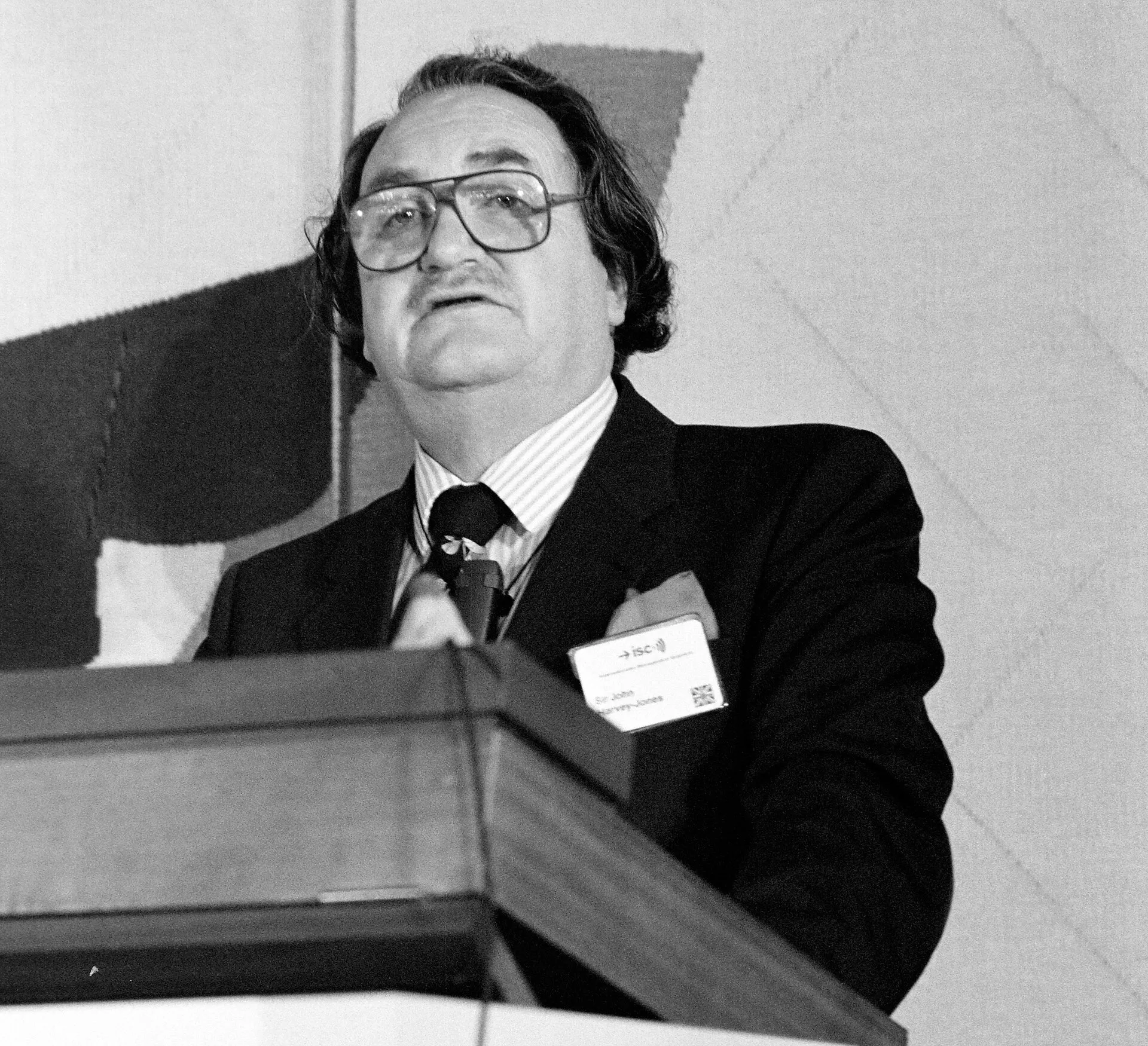
And what happened? The programme brought in hundreds of orders, which the company history says made the waiting list longer still! Unsigned company history Harvey-Jones later said he was pleased to have been proved wrong. Wikipedia A report from June 1990 has the chairman, Peter Morgan, saying of Harvey-Jones that “with us, he was out of his depth.” The firm was then making about 430 cars a year, and orders had tripled since the broadcast. Christian Science Monitor, 1990
It was the sixth and last programme of the first series, which the BBC began broadcasting on Tuesday 27 March 1990. Wikipedia: Troubleshooter The series went out weekly on Tuesday nights: The Times previewed the Copella programme on the evening of Tuesday 3 April and, on 18 April, reviewed “last night’s” Shropshire Health Authority programme, the fourth. That puts the sixth, Morgan, on Tuesday 1 May 1990, the date in the Registry timeline, though I have not yet found the listing for that night. The Times, March–April 1990
Sources differ
The Registry timeline and Wikipedia’s company article date the programme 1990; Wikipedia’s article on Charles Morgan says 1991. A newspaper report dated 7 June 1990 already discusses it, which settles the year. The weekly schedule puts the broadcast on 1 May 1990. Wikipedia, Christian Science Monitor, 1990
How long the wait was: around a decade, in the Registry timeline; five years when Harvey-Jones arrived, rising to eight after the programme, according to the 1990 report. Christian Science Monitor, 1990
1985–1999Eleven a week
Charles Morgan, who had spent about ten years as a news cameraman for ITN, joined the company full time in 1985. Wikipedia In 1997 the range was overhauled: aluminium wings formed by the Superform process, longer doors, a new dashboard to take airbags, the 4.6-litre V8, and a new paint shop using water-based paint. Unsigned company history
From February 1999 the works built eleven cars a week, more than in any year since before the Second World War, and about half went abroad. Unsigned company history That year Peter Morgan turned eighty and retired, staying on as chairman, and his son took over the running of the company. Wikipedia
Sources differ
When Charles Morgan joined the company full time: 1985, according to Wikipedia; 1987, according to Morgan’s own history, which puts it in the year the Plus 4’s Rover engine arrived. Wikipedia, Morgan, History (2022)
Around 1998 I became acquainted with Lorne Goldman, who had started the Gomog site, still the bible for detailed information about Morgans, and that same year I began Morganville. It has listed over 5,000 Morgans since… and you are reading it now!